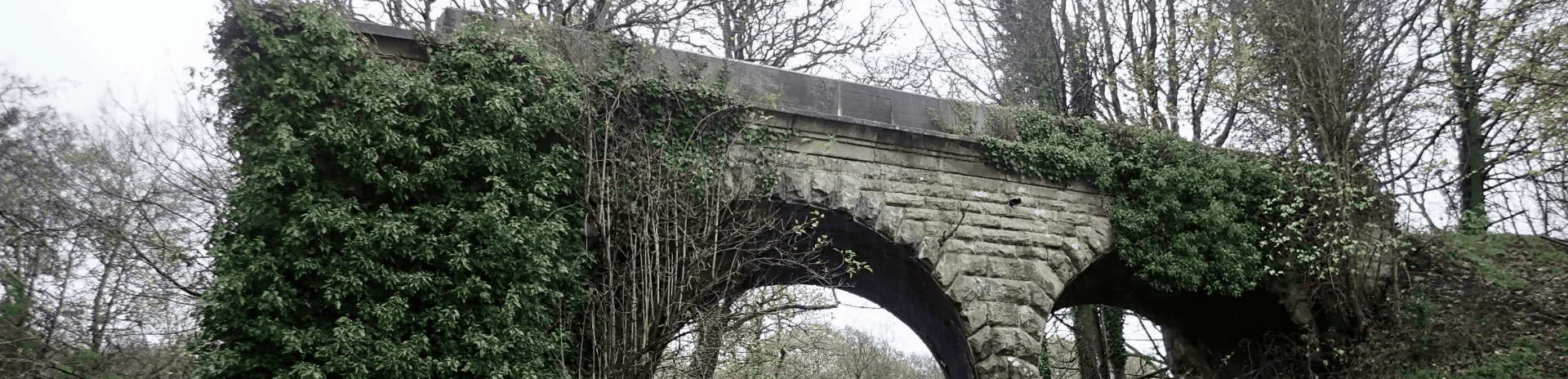

On the night of Sunday, August 1, 1858, Mary Jane Scaife (1837-1858) walked up a narrow, stone-walled lane above the village of Darley with James Atkinson, a man she had known since childhood. He was a man she had once expected to marry. But she did not walk back down.
This is the story of my 3rd-great-grandaunt, Mary Jane Skaife, and of the courtship that ended in her murder. She was, by all accounts, a smart, active, well-liked young woman from Fringill, in the township of Darley, in the West Riding parish of Hampsthwaite1. Her murder and the subsequent trial made national headlines and had broad-reaching impacts on mental health defenses in the United Kingdom.
Childhood Companions
Mary Jane was born September 11, 1836, in Thruscross, Yorkshire, the daughter of Thomas Skaife and Mary (née Downs).2 Her hometown was a quiet farming community in Nidderdale, six miles from Ripley and eight from Harrogate.1
Neighboring the Skaife property was the Atkinson family. James Atkinson, born in 1834, was the son of Thomas Atkinson, a flax-spinner of some local standing and “considerable local property.”1 The two families’ children grew up together, and as the papers later put it, the “affection of childhood extended itself into the love of young adulthood — each looking on the other as a future partner through life”.1 Both Mary Jane and James’ parents were opposed to the partnership. Specifically, Atkinson’s father and Mary Jane’s mother disapproved.3
Estrangement, Gill, and Manchester
About two years before her death, the courtship broke off. Mary Jane accepted the attentions of a young farmer named Jeffrey Gill, of the neighboring township of Killinghall.1 Soon after, hoping to put the Atkinson courtship behind her for good, she was sent into service in Manchester as a nursemaid, where she remained for about eighteen months before returning home in August 1857.1 Both old flames pursued Mary Jane on her return. In time, Atkinson was once again accepted as her acknowledged lover, and the two families began, reluctantly, to prepare for a wedding. This marriage made “the more necessary,” one paper delicately noted, by Mary Jane’s condition in recent months – suggesting that she was with child.1
Despite the apparent quickening of their relationship, Mary Jane’s doubts about it’s viability lingered and she stayed on friendly terms with Gill. While at a gala at Bewerley Park, Gill approached Mary Jane and Atkinson and struck up a conversation. Atkinson later wrote that Gill asked her whether she meant to join the kissing ring (a Victorian-era party game similar to ‘Spin the Bottle’); she answered him bitterly, and Gill walked off.4 The newspapers reported that the encounter provoked “a strong feeling of jealousy” in Atkinson and a group of village men noticed how closely Atkinson and Mary Jane kept to one another in the days that followed.5
The Last Sunday
On Sunday, August 1, 1858, Atkinson spent the day with Mary Jane. They attended Darley Church together in the morning and Hartwith Episcopal Chapel in the evening, seen by witnesses going up together “apparently on very good terms.”1 Mary Jane’s brother and his own sweetheart joined them for the walk home, the two couples returning toward Darley together, the brother’s pair walking a little ahead.1 Records do not indicate whether this brother is my Great-Great-Great Grandfather Thomas Skaife, or their brother Michael.
As they came out of Nidd Lane into the village 9:30pm, they passed a group of men. One, William Pullan, made a joke towards the couple, to which Atkinson gave a terse reply.1 The two couples then turned up Stump Lane, a rough, rising, stone-walled by-road. While Mary Jane’s brother and his girlfriend went on ahead, Atkinson and Mary Jane lingered behind, likely climbing over a wall into an adjoining field.1
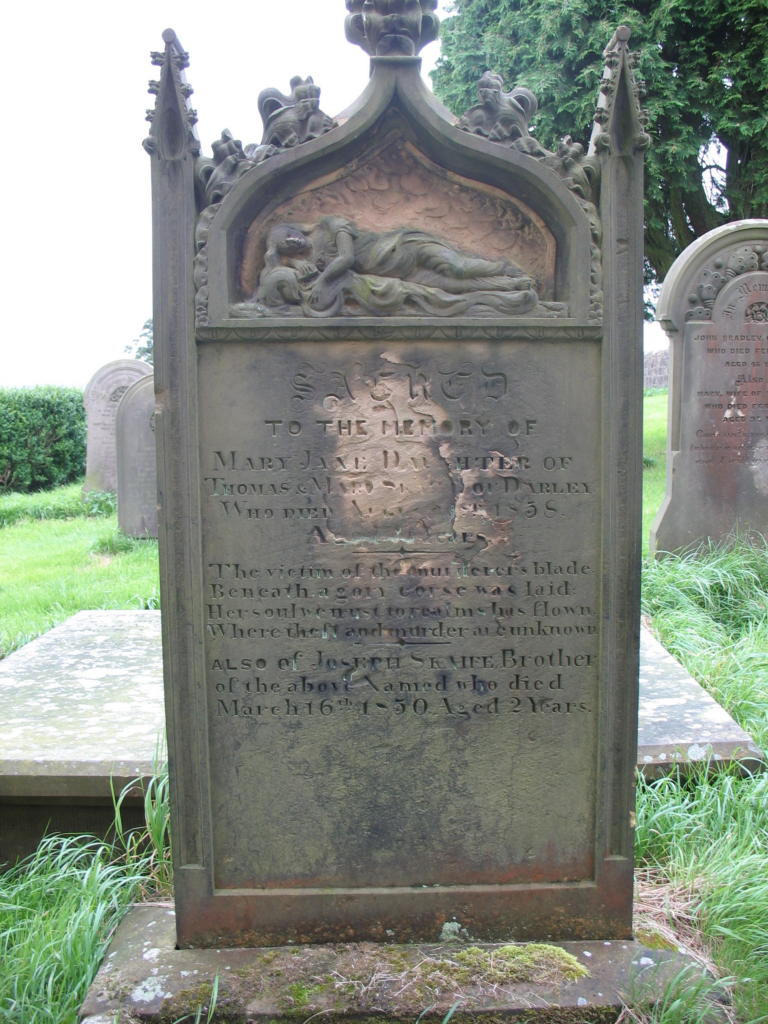
By Atkinson’s written account, he pressed her once more to marry him; she refused. He told her that he would murder her; he then did so with a pocket-knife he had brought.4 The newspapers said he first seized her by the throat and threatened to strangle her, stopping only when she shrieked. A schoolmaster’s wife and daughter at Fringill, some four to five hundred yards off, heard a “dreadful noise”; the daughter, out walking, was frightened enough to turn back.1
Atkinson pulled the knife to coerce her, but she still refused. Atkinson then cut her throat as she cried out, “Lord have mercy upon me!”1 She fell to the ground. Her wounds were severe: eight distinct gashes to the throat, one puncture to the face, and another on the collarbone. The papers agreed that Atkinson likely continued attacking Mary Jane even after she fell1 and her head was nearly severed from her body.5
Atkinson crossed the fields home, hiding the knife in a wall along the way.1 He did not go to bed easily. Sometime before dawn, his brother and roommate Thomas noticed blood on his shirt. When Thomas asked why, Atkinson volunteered the confession, “What have I done? Oh Lord have mercy upon me. What have I done! I have murdered Mary Jane Skaife.”
“What have I done? Oh Lord have mercy upon me. What have I done! I have murdered Mary Jane Skaife.”
Mary Jane’s body was found early the next morning by a passer-by along Stump Lane. Her parasol and prayer book had been found at her side.5 Atkinson was taken into custody. Mary Jane was buried at St Jude’s, Hartwith — the same church she and Atkinson had walked to together on the last evening of her life.
Confession and Arrest
Brought first before the magistrates in nearby Ripon, and then to Knaresborough, Atkinson no effort to deny his crime. “I have committed a great crime, but I am quite content,” he is reported to have said. “I can go freely to the gallows. I can forgive the vilest of the vile. I am guilty.”3 Leaving the dock, he turned to the room and said, “Gentlemen, I hope to meet you all in heaven.”3 (Christ, what an asshole.)
At the Wednesday examination at Knaresborough, Atkinson gave a fuller, largely unprompted statement, in which he described the day’s events from his own perspective, corroborating the reporting.4 At the close of the examination, the chairman of the magistrates put it to him directly: that by his own confession there could be no doubt he was the murderer of Mary Jane Skaife. “Yes, I am,” Atkinson answered.4 He was committed to stand trial at York.
The Prison Letters
While awaiting trial at York Castle that autumn, Atkinson wrote at least three surviving letters to Mary Jane’s family — one to her brother, two to her sister. They were published the following year in the Journal of Mental Science (later the British Journal of Psychiatry), and offer an extended (though barely literate) window into how Atkinson understood/excused what he had done.6
Each letter opens with “Dear Friend” or “Dear Friends.” Each returns to the same handful of grievances: that Mary Jane’s mother had turned against him, that a momentary jealousy over Gill had never been resolved, that the family was as much to blame for the tragedy as he was. He quotes scripture at length, including Isaiah 55, Matthew 5:7, and Luke 21. These passages meant to invoke forgiveness and divine mercy, even as he recounts the killing itself. In the second letter, written to Mary Jane’s sister, he recalls that Mary Jane had told him the previous winter she thought “something would hapen us quear in the end [sic]”, framing the murder almost as a fate the two of them had been moving toward together, rather than something he alone had done to her.6
By the third letter, in November, his tone shifts toward something closer to remorse. He calls his act “one of the awfullest crimes that ever was committed,” admits to having considered “putting himself away” afterward, and writes of the grief he has brought on his parents. His self-pity and appeals for forgiveness are evident throughout.6 I say again — what an asshole.
Trial and Verdict
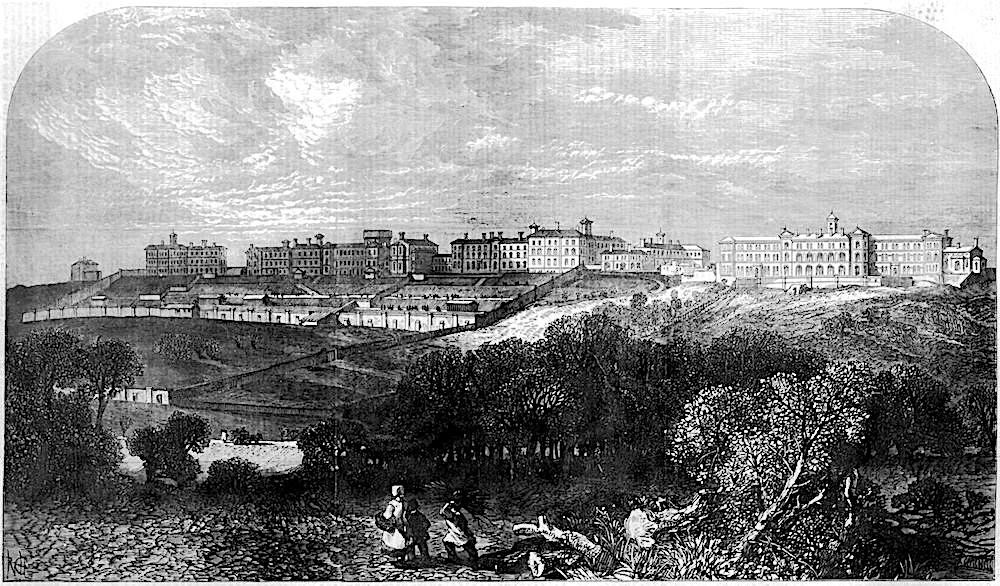
At his trial at York Castle that winter, the defence argued that Atkinson lacked the capacity to form criminal intent. The jury found him not guilty of murder by reason of insanity, under the somewhat recently-established M’Naghten Rules.7 He was committed to Broadmoor Criminal Lunatic Asylum at Sandhurst, Berkshire, on October 10, 1864, and he would remain there until his death about fifty years later. Broadmoor did not yet maintain its own burial register, so his death was recorded instead in the parish register of St John the Baptist Church, Crowthorne, where he is buried.8
Sources
Footnotes
- “A Very Dreadful Murder,” Leeds Intelligencer, 7 Aug. 1858.
- Mary-Jane Skaife’s birth date, birthplace, and parents’ names (Thomas Skaife and Mary Skaife, née Downs) per family record.
- “Murder of a Young Lady by her Lover, near Ripley,” Leeds Mercury, 3 Aug. 1858, p. 3.
- “The Murder of a Young Lady at Darley — The Murderer’s Confession,” Morning Chronicle (London), 6 Aug. 1858
- “Murder of a Young Lady by her Lover, near Ripley,” Bradford Observer, 5 Aug. 1858.
- Atkinson, J.A., “James Atkinson’s Prison Letters,” Journal of Mental Science (later British Journal of Psychiatry), vol. 5, no. 29 (1859), pp. 430–434. doi:10.1192/bjp.5.29.430. Three letters survive: Letter I (3 Sept. 1858, to Mary Jane’s brother), Letter II (Sept. 1858, to her sister), Letter III (17 Nov. 1858, to her sister).
- Undated postscript appended to the Leeds Intelligencer clipping, source and date of composition unconfirmed; reports the trial verdict, Broadmoor committal (10 Oct. 1864), and date and age at death.
- St John the Baptist Parish Church, Crowthorne, parish register (Broadmoor had no burial register of its own at the time); Find A Grave, Broadmoor Asylum Cemetery, Crowthorne, Bracknell Forest, Berkshire.
Other Links of Note
- The Forgotten Voice of Mary Jane – Nidd Films, producers of Sweetheart: Angel of the Moor, a short film about Mary Jane Skaife.
- Scaife Study Group (UK)
- Darley Heritage Trail Brochure